
Twi Takes Focus at BSIFF 2026
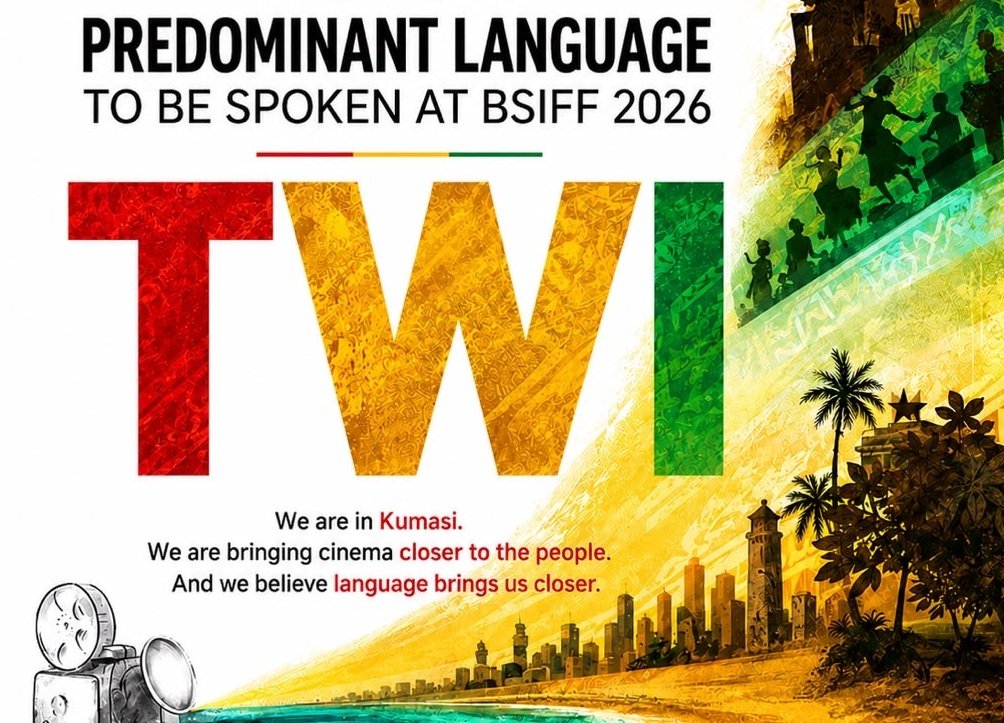
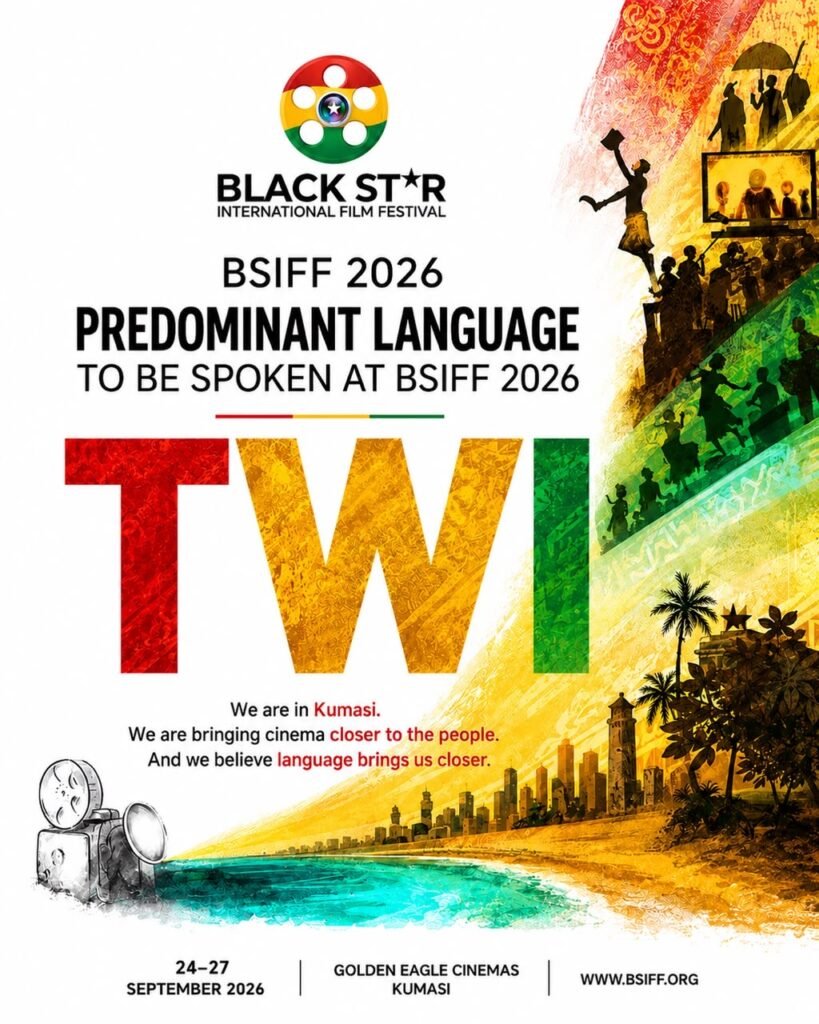
The Black Star International Film Festival (BSIFF) 2026 is placing Twi at the heart of this year’s festival experience, with Twi set to become the predominant language across several aspects of the event.
From master of ceremonies duties and film introductions to selected panel discussions, conversations, and audience question-and-answer sessions, BSIFF says it is deliberately bringing the festival closer to the people and to the language of its host city, Kumasi.
The move forms part of the festival’s broader commitment to local language cinema and its belief that African audiences should be able to experience films, engage in conversations, and participate in the business of cinema in languages they live and communicate in.
Rather than treating language as a barrier, BSIFF sees it as an important part of connecting cinema with its audiences.
Read also: Ghanaian Cinema Takes Center Stage at BSIFF 2026
Beyond Twi: A Wider African Conversation
While Twi will be the predominant language at this year’s festival in Kumasi, BSIFF says the decision represents a broader principle that extends beyond Ghana and across Africa’s many languages.
The festival believes African languages have a rightful place not only on the screen but also in the discussions and interactions that surround cinema.
That includes conversations about filmmaking, the film business, storytelling, culture, and the future of African cinema.
For BSIFF, giving local languages greater space is part of making cinema more accessible and ensuring audiences can participate more meaningfully in the industry.
Translation Will Keep Everyone Included
The emphasis on Twi will not mean excluding international visitors or non-Twi speakers from the festival experience.
BSIFF says English translations will be provided alongside Twi where necessary, allowing international guests and other non-Twi-speaking participants to follow panels, conversations, and audience engagements.
The translation approach will also work in the opposite direction. Where English is used, Twi translation will be provided where needed so that local audiences can remain fully engaged.
The aim is to ensure that language does not prevent anyone from participating.
BSIFF describes the approach not as a choice of one language over another, but as an effort to bring cinema closer to its audience.
A Festival Rooted in Its Host City
The decision is particularly significant as BSIFF stages its 11th edition in Kumasi for the first time.
With Twi deeply connected to everyday communication and cultural expression in the Ashanti Region, the festival’s language policy places the host city and its audiences at the centre of the experience.
The approach also aligns with BSIFF’s wider focus on local-language cinema and its efforts to explore how African stories and languages can connect with audiences beyond the continent.
As films increasingly cross borders through subtitles, dubbing, and digital platforms, BSIFF is making the case that the conversations surrounding those films should also make room for the languages of African audiences.
The message is clear: African languages do not belong only in everyday life. They belong in cinema, on the screen, and in the conversations that shape the industry.
BSIFF 2026 will take place from September 24 to 27, 2026, at Golden Eagle Cinemas in Kumasi.
For the festival, putting Twi first this year is ultimately about one thing: bringing cinema closer to the people through language.
About The Author