
New Ghana Cedi Notes: Features, Denominations, and Changes
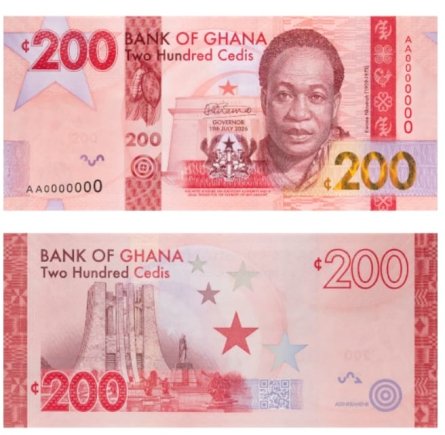
The Bank of Ghana's new Cedi Heritage Series features redesigned banknotes celebrating Ghana's history and cultural identity.
The New Ghana Cedi Notes introduced by the Bank of Ghana mark an important development in Ghana’s currency system.
Known as the Ghana Cedi Heritage Series, the redesigned banknotes feature enhanced security measures, improved durability, and designs celebrating the country’s history and cultural identity.
The Bank of Ghana unveiled the new banknotes on Thursday, November 12, 2026, at its headquarters, Bank Square, in Accra, with President John Dramani Mahama participating in the launch alongside the Governor of the Bank of Ghana, Dr. Johnson Pandit Asiama.
The upgraded currency is being introduced under the theme “The Cedi, Our Future: Secure, Designed to Last.” It represents an effort to modernize Ghana’s physical currency, strengthen protection against counterfeiting, and improve the quality of banknotes used in everyday transactions.
Download the Cedi App here
The new series retains the existing range of denominations, from GH¢1 to GH¢200, while introducing distinctive designs that recognize prominent Ghanaians, historic landmarks, and cultural symbols.
The Bank of Ghana has scheduled December 1, 2026, for the new banknotes to enter circulation. Existing cedi notes will remain legal tender and circulate alongside the Heritage Series during the transition.
Why Has the Bank of Ghana Introduced New Cedi Notes?
The introduction of the Heritage Series follows more than two decades of using the existing core banknote designs. During this period, developments in currency production, security technology, and the way people conduct financial transactions have created the need to upgrade physical money.
Banknotes are regularly exchanged between individuals, businesses, financial institutions, and traders. Their continuous circulation exposes them to physical damage, while advances in printing technology have also made currency security an important consideration for central banks.
The Bank of Ghana says the redesigned notes are intended to address these challenges by strengthening protection against counterfeiting, improving durability, and supporting more efficient currency management.
Counterfeiting is particularly important because fake currency can result in financial losses for individuals and businesses while weakening confidence in cash transactions. Improved security measures are therefore intended to make the new notes more difficult to reproduce illegally and easier for the public to recognize.
The upgrade also reflects the need to manage the cost of replacing damaged banknotes. Notes that deteriorate quickly require more frequent replacement, creating additional printing, processing, and distribution expenses.
By introducing more durable banknotes, the central bank hopes to extend their useful life and improve the efficiency of currency management.
New Ghana Cedi Notes: All Eight Denominations Explained
The Ghana Cedi Heritage Series retains eight denominations, covering the existing range of banknotes. These are GH¢1, GH¢2, GH¢5, GH¢10, GH¢20, GH¢50, GH¢100, and GH¢200.
One notable development is the reintroduction of the GH¢2 banknote as part of the upgraded series. The Bank of Ghana has maintained the existing denomination structure rather than introducing a higher-value note.
The eight denominations also feature different historical personalities, giving each banknote a distinct connection to Ghana’s national story.
The personalities featured on the new banknotes are
- GH¢1 – Agnes Oforiwa Tagoe-Quarcoopome: Recognized for her place in Ghana’s banking history as the first Makola woman to open an account with the then Standard Bank of West Africa, now Standard Chartered Bank.

- GH¢2 – Cardinal Peter Porekuu Dery: A prominent Ghanaian Catholic religious leader whose contributions to religious and national life are recognized through the new design.

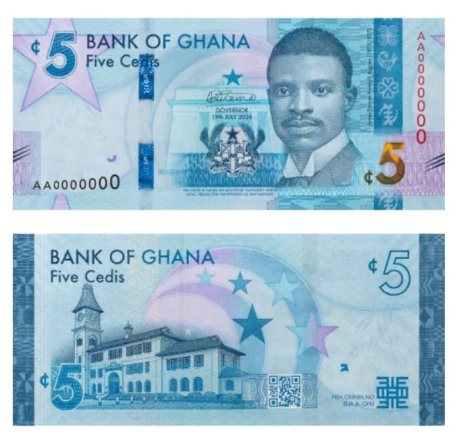
- GH¢5 – James Emmanuel Kwegyir-Aggrey: An influential Ghanaian educationist remembered for his contribution to education and advocacy for educational opportunities.
- GH¢10 – Justice Annie Jiagge: A pioneering Ghanaian jurist who became the first woman in Ghana and the Commonwealth to serve as a judge.

- GH¢20 – Dr. Ephraim Amu: A renowned composer, educator, and cultural figure associated with the Twi version of Ghana’s national anthem, “Yɛn Ara Asaase Ni.”

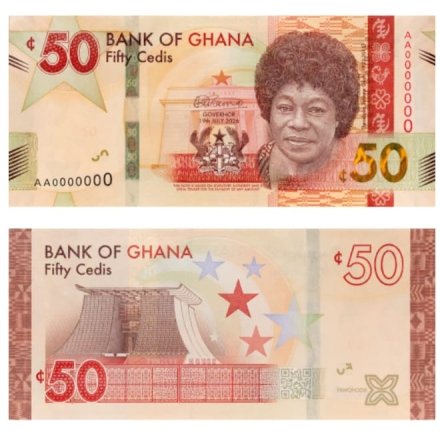
- GH¢50 – Theodosia Salome Okoh: The designer of Ghana’s national flag, whose contribution remains an important part of the country’s national identity.
- GH¢100 – Kofi Annan: Ghana’s internationally celebrated diplomat and former Secretary-General of the United Nations.

- GH¢200 – Dr. Kwame Nkrumah: Ghana’s first president and a leading figure in the country’s independence struggle and Pan-African movement.
The selection represents contributions across banking, religion, education, law, music, diplomacy, and politics.
The new series also adopts an individual-portrait approach rather than retaining the collective Big Six portrait used on the existing banknotes. Dr Kwame Nkrumah is the only member of the Big Six featured in the new series, appearing on the GH¢200 note.
This change gives greater visibility to other personalities whose work has shaped Ghana’s historical and national development.
Key Features and Changes in the Ghana Cedi Heritage Series
Beyond the new portraits, the Heritage Series introduces practical changes intended to improve how the public uses and recognizes physical currency.
Enhanced security features
The new notes incorporate improved security measures designed to strengthen protection against counterfeiting and help users distinguish genuine banknotes from fake ones.
For the public, understanding these features will be important when receiving cash, particularly in busy commercial environments where transactions take place quickly.
The Bank of Ghana is expected to support this process through public education and the Cedi App, which will provide information about the features of the new notes.
Improved durability and material quality
Durability is another major consideration behind the redesign.
The new banknotes retain a cotton-based material, with additional reinforcement intended to make them stronger and more resistant to the demands of everyday handling.
This approach is intended to help the notes withstand frequent circulation and Ghana’s climatic conditions, reducing the rate at which they become damaged or unfit for use.
Longer-lasting banknotes can also help reduce the cost associated with printing, processing, and replacing worn-out currency.
Smaller and more portable designs
The Heritage Series introduces smaller banknote sizes to improve convenience when carrying, storing, and using cash.
Different sizes across denominations can also help users distinguish between notes. This is particularly relevant for people with visual impairments, although the Bank’s accessibility initiatives also include the introduction of the Cedi App.
Ghanaian history and cultural identity
One of the most distinctive aspects of the Heritage Series is its emphasis on Ghana’s history and cultural identity.
The banknotes feature national personalities, historic sites, monuments, and Adinkra symbols. These elements connect the country’s historical achievements and cultural values with the money people use every day.
Adinkra symbols are traditional visual representations associated with Ghanaian philosophy, wisdom, values, and social principles. Their inclusion gives the banknotes cultural significance beyond their function as a medium of exchange.
The designs are intended to encourage Ghanaians, particularly younger generations, to develop a stronger appreciation of the people, institutions, and events that have shaped the country.
When Will the New Ghana Cedi Notes Enter Circulation?
Although the Bank of Ghana officially unveiled the Heritage Series on November 12, 2026, the notes will not become available for general transactions on the launch day.
The central bank has announced December 1, 2026, as the official date for their introduction into circulation.
The distribution will take place through the banking system, allowing commercial banks and other financial institutions to prepare for the transition.
This preparation is important because banks use automated teller machines (ATMs), cash-processing equipment, and other systems that must be able to recognize and handle the upgraded banknotes.
The period between the unveiling and circulation also provides an opportunity for public education, allowing individuals, traders, and businesses to become familiar with the new designs and security features.
The Bank of Ghana has announced a nationwide public education campaign across all 16 regions and in major local languages. The initiative is intended to help citizens identify genuine notes, understand the changes, and handle the currency responsibly.
Will the Old Ghana Cedi Notes Remain Legal Tender?
Yes. Existing Ghana cedi banknotes will remain legal tender and circulate alongside the new Heritage Series.
This is one of the most important things Ghanaians need to understand about the introduction of the upgraded currency.
The announcement does not mean that people must immediately exchange their existing notes or withdraw money from their bank accounts to obtain the new designs.
The Bank of Ghana has assured the public that the existing banknotes will continue to be accepted for legitimate transactions while the new series gradually enters circulation.
The two series will therefore operate side by side during the transition. The older notes will be withdrawn gradually as part of the central bank’s currency management process.
For traders, transport operators, retailers, and consumers, this means that the introduction of the new notes should not disrupt ordinary cash transactions.
It is also important to distinguish a currency upgrade from a redenomination.
A redenomination changes the numerical value or unit of a currency, often by removing zeros from banknotes. The Heritage Series does not do this. A GH¢10 note, for example, will continue to represent GH¢10. The changes concern the physical design, material quality, security, and usability of the banknotes.
Bank of Ghana Launches Cedi App to Educate the Public
Alongside the new banknotes, the Bank of Ghana has introduced a digital application called The Cedi, designed to help the public understand the Heritage Series and its security characteristics.
The application forms part of the central bank’s efforts to make currency education more accessible, particularly for persons with visual impairments.
Through the initiative, users will have access to information about the new denominations and the features incorporated into the redesigned banknotes.
The Cedi App is particularly relevant because recognising genuine currency helps prevent losses from counterfeit money.
The application complements the Bank of Ghana’s planned nationwide education campaign, which will use major local languages to reach people across the country.
Ghanaians should consult the official Bank of Ghana information and verified application listing when accessing currency education resources.
Introducing stronger banknotes does not remove the need for responsible currency handling.
The Bank of Ghana has urged individuals, businesses and financial institutions to treat banknotes as a national asset and avoid practices that shorten their lifespan.
These include:
- Writing on banknotes or deliberately defacing them.
- Stapling notes unnecessarily.
- Excessively crumpling or folding banknotes.
- Spraying or showering money during celebrations.
- Using banknotes to make money bouquets or decorative displays.
- Deliberately mutilating or damaging currency.
Such practices can reduce the quality of banknotes and increase the cost of replacing damaged money.
The central bank has also indicated that it is working with stakeholders on a new Currency Act to modernise the legal framework governing Ghana’s currency. The proposed legislation is expected to strengthen provisions against counterfeiting and establish clearer procedures for detecting, authenticating, surrendering and destroying counterfeit notes.
The proposed law would also provide firmer legal backing for measures against currency mutilation and abuse. It is important to note that this is a proposed legal reform, not an indication that a new Currency Act has already been enacted.
A New Chapter in Ghana’s Currency History
The Ghana Cedi Heritage Series represents an important development in the country’s approach to managing its national currency.
By combining improved security, stronger materials, more portable designs and historical representation, the Bank of Ghana is seeking to make physical money more resilient while strengthening its connection to Ghana’s national identity.
The introduction also highlights the continuing importance of physical cash, even as digital payments and electronic financial services become increasingly common.
As the new notes enter circulation from December 1, 2026, public awareness will be essential to ensuring a smooth transition. Understanding the denominations, recognising genuine banknotes and knowing that existing notes remain valid will help Ghanaians adjust confidently.
Ultimately, protecting the cedi is a shared responsibility. The Bank of Ghana has a duty to issue and manage the currency, but individuals, traders and businesses also have a role in preserving its quality and integrity.
The Heritage Series is therefore not simply a change in the appearance of Ghana’s money. It is an effort to combine currency security, economic functionality and national heritage in the banknotes used by Ghanaians every day.
Sources: Bank of Ghana – Official launch remarks by Governor Johnson Pandit Asiama, Graphic Online – Names of Personalities and Security Features on the New Notes
About The Author





1 thought on “New Ghana Cedi Notes: Features, Denominations, and Changes”