
How Stress Quietly Affects Your Body and Mental Health: All You Need to Know
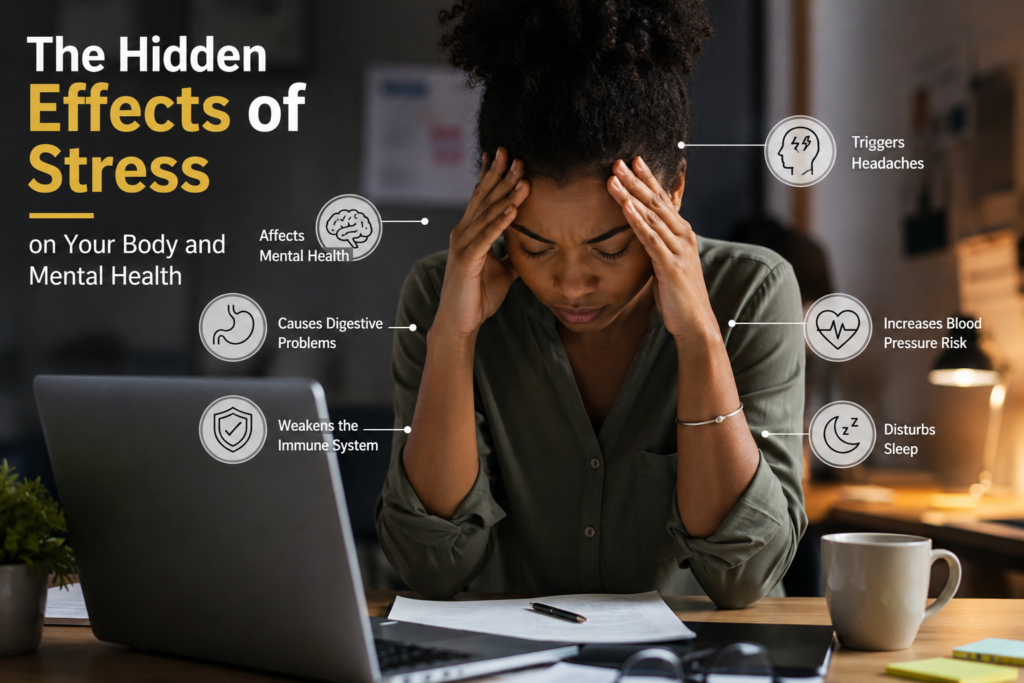
Stress does not always arrive loudly. Sometimes, it quietly changes your body, mind, and life before you even notice it. — XyloseXpress
We often think of stress as something emotional, a bad day at work, financial pressure, relationship problems, deadlines, family responsibilities, or simply trying to keep up with life.
But what many people do not realize is this: Stress is not just something you feel. Stress is something your body experiences. And sometimes, the effects begin long before you recognize what is happening and are killing you slowly.
In today’s fast-moving world, stress has become almost normal. Many people live with constant pressure without stopping to ask what it may be doing to their physical and mental well-being.
Yet health experts continue to warn that unmanaged stress can quietly affect nearly every part of the body.
Read also: Genital Warts and HPV
What Really Happens to Your Body During Stress?
When you experience stress, your body enters what scientists call a “fight or flight” response.
This is your body’s natural survival system. Stress hormones such as cortisol and adrenaline are released to help you respond quickly to danger or pressure.
In short moments, this response can be helpful. But when stress becomes constant, the body remains in a prolonged state of tension, and that is where the hidden problems begin.
1. Stress Can Affect Your Heart
Many people do not connect stress to heart health. However, chronic stress may increase blood pressure, heart rate, and inflammation within the body.
Over time, this can increase the risk of cardiovascular problems. People under prolonged stress may also develop unhealthy coping habits such as poor eating, smoking, lack of exercise, or poor sleep, all of which can place additional pressure on the heart.
2. Your Sleep Begins to Suffer
Have you ever felt exhausted but still unable to sleep? Stress is often one of the biggest causes. Overthinking, worrying, mental exhaustion, and restlessness.
All of these can interfere with sleep quality. And poor sleep creates another problem: it increases stress even more. This cycle can leave people emotionally drained and physically exhausted.
3. Stress Can Affect Mental Health
One of the most hidden effects of stress is its impact on mental wellness.
Long-term stress may contribute to:
- Anxiety
- Burnout
- Mood swings
- Emotional exhaustion
- Difficulty concentrating
- Depression symptoms
Many people struggling emotionally are not necessarily weak or unmotivated. Sometimes, they are simply overwhelmed. Stress can slowly reduce emotional resilience, making even small challenges feel heavier than usual.
4. Your Immune System May Become Weaker
When stress levels remain high for too long, the immune system may become less effective.
This can make the body more vulnerable to:
- Frequent illness
- Fatigue
- Slow recovery from sickness
- Persistent tiredness
In simple terms, stress can quietly make the body less prepared to defend itself.
5. Stress May Affect Digestion and Appetite
The stomach often reacts to emotional pressure.
Many people experience:
- Loss of appetite
- Overeating
- Stomach discomfort
- Digestive issues
This is because the gut and brain are deeply connected. What affects the mind often affects the body too.
The Hidden Mental Weight of “Always Wanting More”
Sometimes stress does not come only from problems. It also comes from pressure. The pressure to achieve more, own more, become more, and keep up with others.
Social media, comparison culture, financial expectations, and personal ambitions have created a world where many people rarely feel satisfied.
This constant desire to keep chasing can quietly become emotional exhaustion.
As discussed in many personal development conversations today, the culture of wanting may contribute to our stress. The problem is not ambition. The problem is when life becomes a race without rest.
Warning Signs You May Be More Stressed Than You Think
Sometimes stress hides itself in ways people overlook. Common warning signs include:
- Constant fatigue
- Irritability
- Feeling emotionally overwhelmed
- Trouble sleeping
- Frequent headaches
- Lack of motivation
- Feeling mentally drained
- Difficulty focusing
If ignored for too long, stress can begin affecting the overall quality of life.
Healthy Ways to Manage Stress
The good news? Stress can be managed. Small changes often make a big difference.
Try:
1. Prioritizing Rest
Know that sleep is not laziness; it is recovery.
2. Talking to Someone
Support matters. Sometimes speaking openly can reduce emotional pressure.
3. Taking Breaks
Constant productivity without rest often leads to burnout.
4. Exercising Regularly
Even simple walks can improve mood and reduce tension.
5. Reducing Comparison
Always know that your journey is different from someone else’s. Not everything needs to happen at once; learn to take one step at a time.
Final Thoughts
Stress may be invisible, but its effects are real.
And perhaps the greatest mistake people make is waiting until they completely break down before paying attention to their well-being. Success, ambition, and goals matter, but good health matters too.
Because what is the point of building a life if stress quietly steals your peace while you are trying to build it? Perhaps the real challenge is not avoiding stress completely. It is learning how to live, dream, grow, and still protect your mind and body along the way.
“You do not have to carry every burden alone. Sometimes healing begins when you finally admit that pressure has become too heavy.” — XyloseXpress
About The Author





1 thought on “How Stress Quietly Affects Your Body and Mental Health: All You Need to Know”