
How Much Is Too Much? Juliet Asante’s Powerful Lesson on Success and Knowing When to Stop

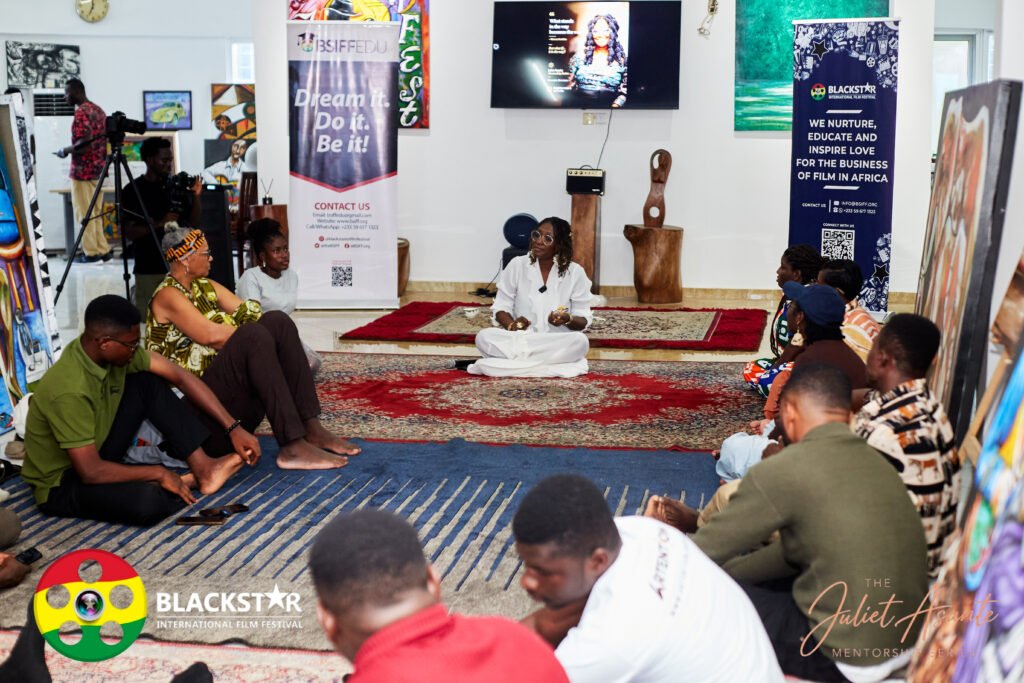
Filmmaker and cultural leader Juliet Asante speaking at the inauguration of the Juliet Asante Mentorship Series in Ghana.
“Success is not only about how far you can go—sometimes wisdom is knowing when to stop before ‘more’ costs you everything.”
— XyloseXpress
There are moments when a single question lingers in your mind long after the room has gone quiet. Not because it was loud. Not because it was dramatic. But because it quietly unsettles something inside you, it leaves you reflecting deeply on your life, choices, and direction
At the inauguration of the Juliet Asante Mentorship Series, one of those moments came when filmmaker, creative entrepreneur, and cultural leader Juliet Asante paused and asked a simple yet deeply powerful question: “How much is too much?”
At first, it sounded like one of those normal, user-friendly questions with an obvious answer. But as she continued speaking, it became clear that this was not simply about having too much of something. It was about life. It was about ambition. It was about repetition.
And perhaps most importantly, it was about the belief many of us carry—that if we keep doing more, success will naturally follow.
“In life, you can keep going forward and doing things without limits and not knowing where and how far you can ‘stretch.'” —Juliet Asante
In today’s world, people are constantly encouraged to push harder by working longer hours, chasing bigger goals, keeping moving, repeating, and going.
The message is almost always the same: If you want success, do more. And somewhere along the way, many people begin to believe that repetition automatically guarantees results.
But Juliet Asante challenged that thinking. Does repeating something over and over always mean success?
Or can constantly chasing “more” sometimes pull us farther away from the very thing we hope to achieve?
To explain her point, she shared a story. A story simple enough to understand, yet powerful enough to stay with anyone willing to reflect on it.
A young man was given what many would consider the opportunity of a lifetime. His father told him he could choose as much land as he wanted. There was only one condition. He had six hours. Within those six hours, he could walk as far as he wished and claim any land he covered.
But once time was up, he had to return home. At first, the opportunity seemed exciting. The young man began walking. Then he kept walking. The farther he went, the more land he saw.
And naturally, he wanted more. After all, if more land meant greater opportunity, why stop now? So he kept moving. A little farther. Then farther again. And again.
Each step convinced him there was something better ahead. Something bigger. Something greater. Something worth stretching for.
But while he was busy chasing more, something else was quietly moving too: Time.
Before he realized it, the six hours were nearly over. Suddenly, excitement turned into panic. He needed to go back home. But there was a problem. He had gone too far. The distance was now too great.
And no matter how hard he tried, he could not return in time. The opportunity he had chased so eagerly slipped through his hands. Not because he lacked ambition. Not because he failed to try. But because he never stopped to ask an important question: How much is too much?
At the heart of Juliet Asante’s reflection was another powerful thought:
“The culture of wanting is part of our stress.”
In a world where people are constantly encouraged to chase money, more achievements, more recognition, and more success, many unknowingly place themselves under pressure that never truly ends.
Perhaps the problem is not ambition itself. It might be the endless culture of wanting without pause, reflection, or balance.
Watch Juliet Asante explain the idea below:
There is something painfully familiar about that story. Many people move through life exactly this way, and we keep convincing ourselves that success can only come from doing more work, more hustle, more pressure, more chasing, and more repetition.
And while ambition itself is not a bad thing, there are moments when the endless pursuit of “more” blinds us to what truly matters.
Sometimes we become so focused on moving forward that we stop paying attention to timing.
And sometimes, in trying to gain everything, we risk losing what mattered most from the beginning.
Juliet Asante’s message was not discouraging ambition.

Far from it. It was a reminder that success is not simply about movement. Success is also about wisdom. Wisdom to know when to stretch. Wisdom to know when to pause. And wisdom to recognize that repetition without reflection does not always produce results.
Sometimes we become so obsessed with reaching farther that we forget we also have to return.
Not every road leads to progress simply because we stay on it long enough. Sometimes the real question is not whether we are working hard. The real question is whether we are moving wisely.
Perhaps that is why “How much is too much?” feels like such an important question for our time.
We live in a culture that celebrates exhaustion. People are praised for being endlessly busy. Rest feels like guilt. Slowing down feels like failure. And stopping feels dangerous.
Yet maybe the strongest people are not always the ones who keep going endlessly. Maybe the wisest people are the ones who understand balance. The ones who know when to move. When to stretch. And when to stop before “more” begins to cost too much.
As the inauguration of the Juliet Asante Mentorship Series reminded many in attendance, success is not always found in going farther. Sometimes success lies in understanding your limits before ambition carries you too far away from what truly matters.
And maybe that is the real power behind Juliet Asante’s unforgettable question: How much is too much?
About The Author