Government Declares July 10–11 National Cleaning Days: What You Need to Know
The government has declared Friday, July 10, and Saturday, July 11, 2026, as National Cleaning Days in seven regions affected by the recent floods, as part of a nationwide effort to reduce the risk of further flooding ahead of the anticipated heavy rains.
The initiative, announced by the Presidency on Monday, July 6, 2026, forms part of recommendations adopted by the Post-Flood Mitigation Committee to improve environmental sanitation, clear blocked drainage systems, and strengthen Ghana’s preparedness against future flood disasters.
Read also BSIFF 2026 Unveils “Film & Global Culture.”
A Nationwide Response to Flood Risks
According to a statement signed by the Spokesperson to the President and Minister of Government Communications, Felix Kwakye Ofosu, the two-day exercise will be held under the theme “Our Actions, Our Future: Cleaning Ghana after the Floods.”
The campaign seeks to mobilize residents across the affected regions to actively participate in cleaning their communities, removing waste from drains and waterways, and promoting responsible environmental practices that help prevent recurring floods.
The government has appealed to all citizens to take part in the exercise, stressing that flood prevention is a shared responsibility that requires collective action.
To demonstrate national leadership and encourage public participation, President John Dramani Mahama has directed all government appointees—including Ministers of State, Chief Executive Officers, Members of Parliament, Metropolitan, Municipal and District Chief Executives (MMDCEs), and heads of public institutions—to leave their offices and personally lead cleanup activities within their respective communities.
The directive underscores the government’s intention to make the exercise both practical and symbolic, reinforcing the message that public service extends beyond the office into the communities people serve.
The National Cleaning Days will be conducted in two phases:
Friday, July 10
- Security agencies
- Metropolitan, Municipal and District Assemblies (MMDAs)
- Waste management companies
These institutions will begin large-scale cleanup operations, focusing on strategic locations and critical drainage systems.
Saturday, July 11
- Members of the public
- Community groups
- Security agencies
- Local assemblies
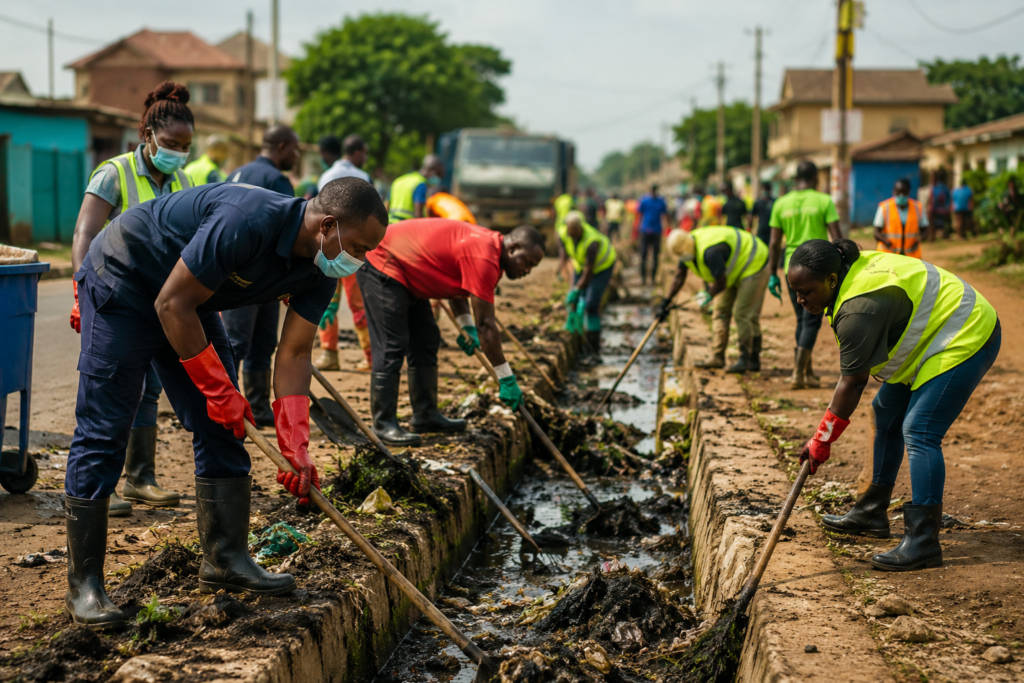
Residents are expected to join the ongoing exercise, turning the initiative into a nationwide community effort. The clean-up exercise will target some of the major causes of urban flooding by carrying out activities such as:
- Desilting blocked drains to improve the free flow of rainwater.
- Sweeping and removing sand, weeds, and debris from roads and highways.
- Cleaning markets, lorry parks, recreational parks, and other public spaces.
- Clearing communal waste collection points.
- Removing refuse from waterways to reduce drainage blockages.
Government officials noted that indiscriminate littering, poor waste disposal, and the increasing accumulation of plastic waste have significantly obstructed drainage systems, contributing to floods that have destroyed property and resulted in the loss of lives.
Logistics and Waste Disposal
To ensure the success of the exercise, all Metropolitan, Municipal and District Assemblies have been directed to collaborate with waste management companies to provide the necessary logistics.
These include:
- Refuse trucks
- Gloves
- Shovels
- Cleaning equipment
- Designated waste collection points
The assemblies have also been instructed to promptly remove all collected refuse and silt to prevent debris from being washed back into drainage channels during subsequent rainfall.
A Call for National Unity
The government believes the success of the initiative depends on the active participation of every Ghanaian.
In the statement, Felix Kwakye Ofosu encouraged citizens to embrace the exercise as a civic responsibility rather than a one-time event. “Let us rise together and show that the Ghanaian spirit of community, discipline, and unity is alive and well. Protect your home, protect your neighbour, and let us clean our beloved homeland.”
The campaign carries the slogan “Clean Ghana, Save Lives.”
Why This Exercise Matters
Flooding remains one of Ghana’s most persistent environmental challenges, particularly during the rainy season. Beyond damaging homes, businesses, and public infrastructure, floods pose serious health and safety risks through contaminated water, waste accumulation, and the disruption of essential services.
The July 10–11 National Cleaning Days therefore represent more than a routine sanitation exercise—they are a proactive effort to protect lives, safeguard communities, and encourage long-term environmental responsibility.
If sustained beyond these two days, the initiative could help foster a stronger culture of cleanliness, proper waste disposal, and community participation, reducing the likelihood of devastating floods in the future.
XyloseXpress Insight
Flood prevention is not solely the responsibility of government institutions. Every plastic bottle properly disposed of, every drain kept clear, and every citizen who joins a community clean-up contributes to building a safer and more resilient Ghana.
National development begins with collective responsibility, and lasting change starts with the actions people take in their own neighbourhoods.
Source: Graphic Online
About The Author